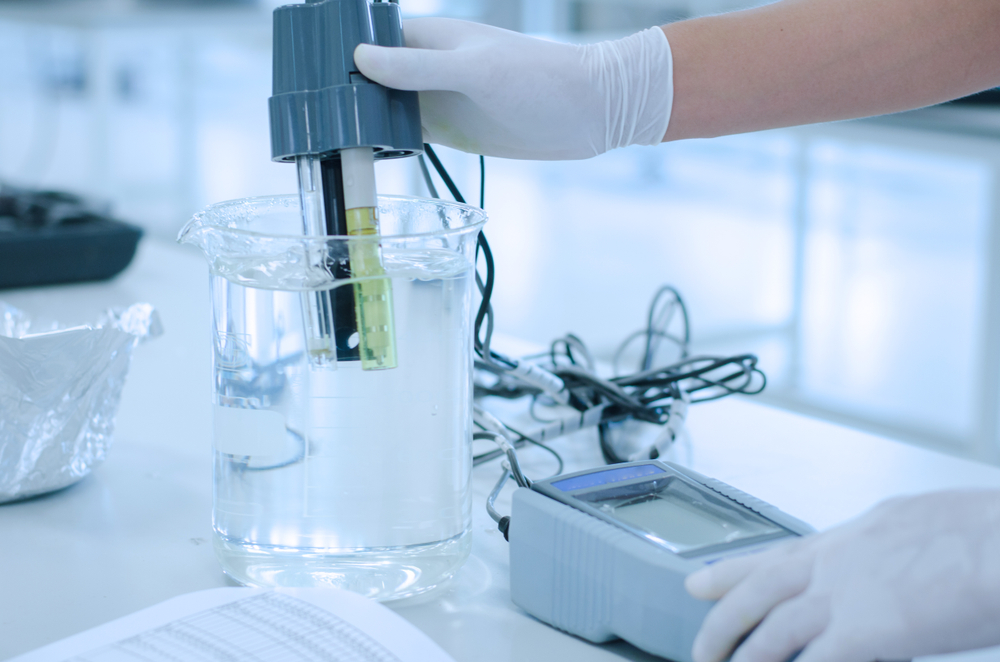
To put this in perspective, consider a 12 M solution of hydrochloric acid (HCL). This chemical should have a pH of -1.08, which is one unit above the standard pH scale, but we cannot measure it with any known instrument. Litmus paper (the most common means of measuring pH) only indicates whether the pH value is above or below seven. As such, pH meters are necessary to establish the actual value. However, even glass-electrode pH meters fail in such extreme tasks because of something called acid error, which causes even these highly advanced devices to measure a pH that is higher than the true value. Even if we improve the efficiency of these instruments and achieve [perfection" (which seems almost impossible), there is still one final problem-effective concentration.